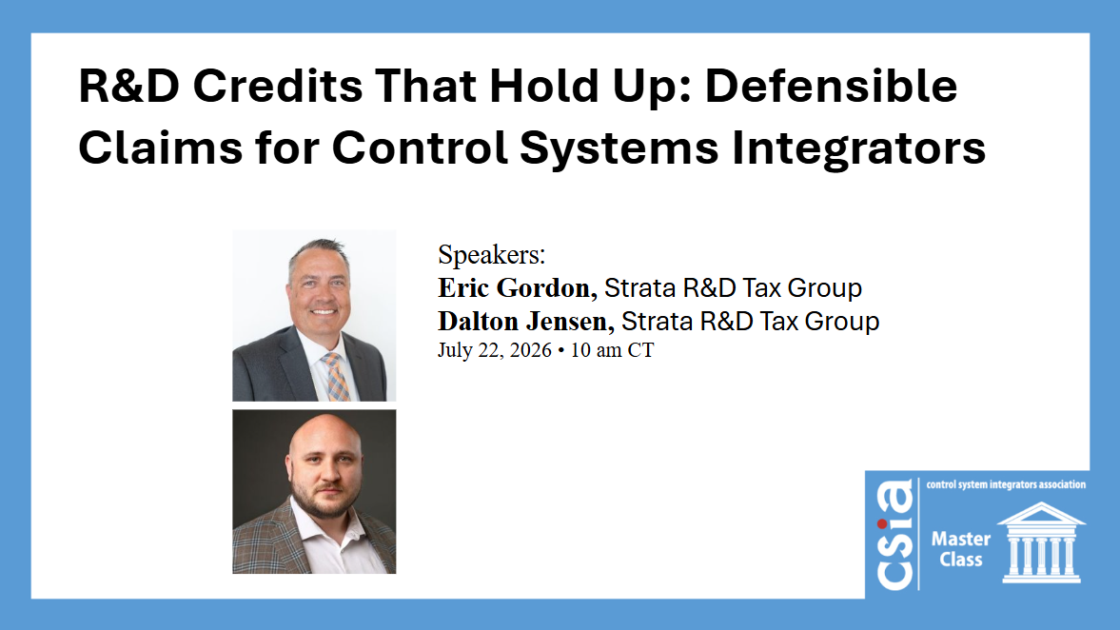
You have heard the pitch. Every firm in this space will tell you you’re leaving money on the table. Fewer will talk about what happens after the claim is filed, when the IRS asks you to back it up.
For control systems integrators, that is the part that matters. Integration work is technical and often custom, which means it can genuinely qualify as R&D. It also means the claim has to be substantiated correctly, tied to real activities and real documentation, or it becomes a liability instead of a benefit.
The problem: The market is crowded with firms racing to put the biggest possible number on your return. An overstated or thinly supported R&D claim doesn’t reduce your risk, it concentrates it, and the exposure lands on you, not the firm that filed it.
The solution: Get the credit right the first time. A claim built on accurate scoping and solid documentation captures what your work earns and stands up when it is examined. That is where Strata’s expertise lives, and it is what “R&D credits, done right” means.
Watch this session, and in just 30 minutes, you’ll learn:
What separates a defensible R&D claim from a fragile one, and why substantiation matters more than the headline figure.
How integration activities like PLC and SCADA programming, HMI development, panel design, system architecture, and commissioning map to qualified research.
What documentation actually supports a claim, so the number on your return is one you can stand behind under scrutiny.
The warning signs of an aggressive study that overstates the credit and quietly transfers the audit risk to you.
If you own or finance a control systems integration firm, this session is for you.
Sponsored by